
Planning your ADU budget is about seeing the whole picture. It's not just the construction. It includes all the key planning that happens before the first nail is hammered.
For an Accessory Dwelling Unit (ADU) in areas like Monterey or Maricopa County, the final price can be anywhere from $60,000 to over $285,000. The final cost depends on the size, design, and details of your property.
Understanding the Real Cost of an ADU
Before you start picking out tile, it's important to understand the full cost of an ADU project. A clear, realistic budget is the best tool you have to make sure your project is a success.
To make sense of it all, we can break the investment into two main groups: hard costs and soft costs.
Think of it like planning a road trip. Your hard costs are the car itself—the parts you can see and touch. The soft costs are everything else you need to plan the trip, like maps and booking campsites. You need both for a good trip.
Hard Costs and Soft Costs Explained
In construction, it works the same way:
- Hard Costs: These are the direct costs for the physical build of your ADU. This includes everything from concrete for the foundation to lumber for framing, roofing materials, and energy-efficient Milgard windows.
- Soft Costs: These are the background costs needed to get your project started. This covers things like architectural design fees, engineering reports, soil tests, and city or county permit fees.
A key part of any successful build is knowing how to budget for a home renovation. This means making a step-by-step plan with a real view of the costs. While national averages give a general idea, local factors in Monterey, Santa Cruz, and San Benito counties really shape the final number.
Setting a Realistic Financial Baseline
Building an ADU in busy markets like California means you have to plan carefully. The cost range is very wide. Nationally, the average cost to build an ADU is around $180,000. Most homeowners spend between $60,000 and $285,000.
Typically, new detached ADUs cost between $110,000 to $285,000. Simpler projects like converting a garage can be much cheaper.
At Aldridge Construction, our job is to help you understand these costs. We give you clear, detailed estimates from the start. We turn a complex project into a manageable investment by making sure you understand every cost.
Understanding local rules is also a big piece of your budget. For instance, knowing the specific California ADU requirements helps you plan for certain soft costs related to permits. Our goal is to give you a clear financial picture and an actionable plan.
Breaking Down Your ADU Budget Item by Item
So, where does the money go when you build an ADU? To create a good budget and avoid surprises, you need to understand each line item. This turns one big number into smaller, easier steps.
To keep it simple, we break every ADU budget into two parts: soft costs (planning and paperwork) and hard costs (physical construction).
This diagram shows how these costs fit together.
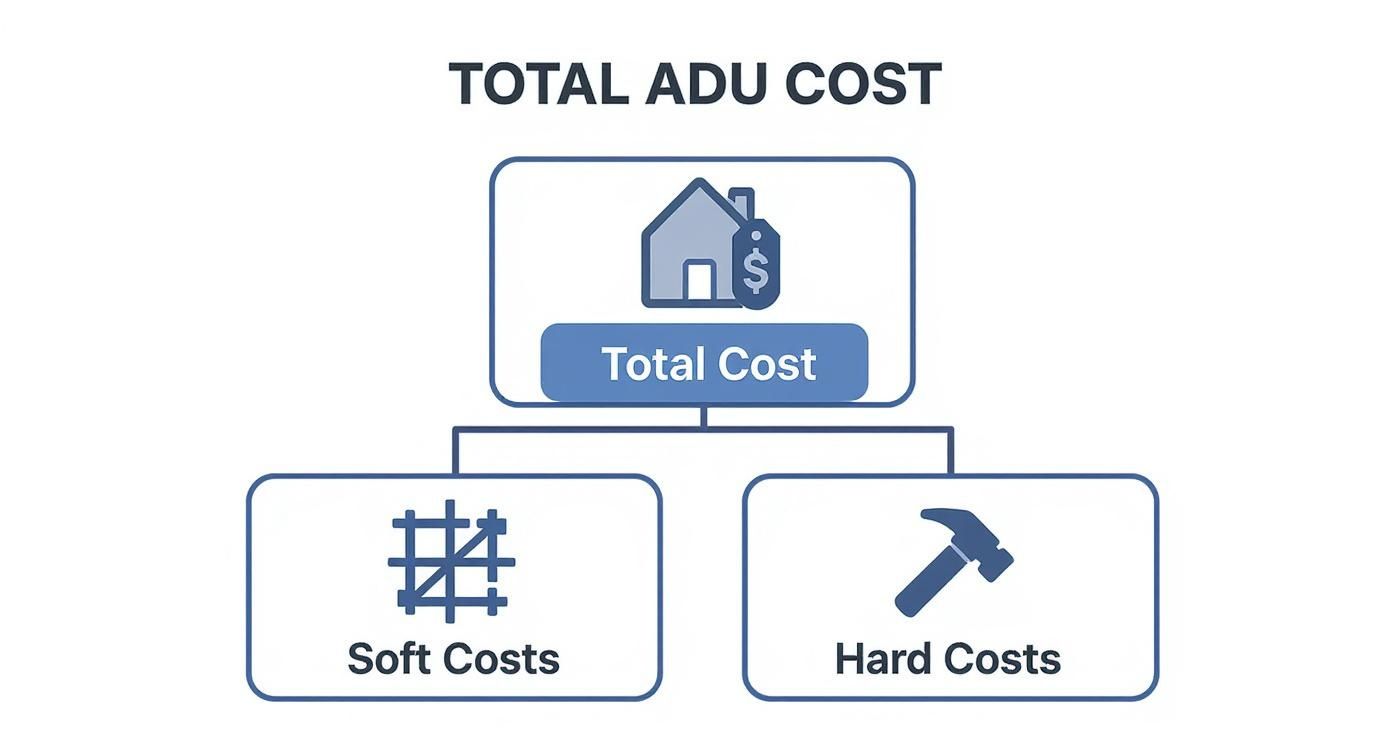
Both categories are important for the final price. The hands-on building work is where most of your budget will be spent.
Key Budget Categories You Need to Know
A solid budget covers every phase of the project, from the first sketch to the final paint. At Aldridge Construction, we provide detailed estimates. This way, you can see exactly where every dollar is going.
Let's walk through the main parts of a typical ADU budget.
- Design and Engineering (8% – 12%): This is the planning stage. It covers architectural plans, structural engineering, and soil reports. These ensure your ADU is safe, sound, and built to last.
- Permits and Fees (5% – 10%): You can't start building without official approval. These costs are for submitting plans to local building departments in Monterey, Santa Cruz, or Maricopa County. It also covers building permits and other city fees.
- Site Preparation (5% – 15%): This is about getting your property ready. It includes clearing the land, grading the soil for drainage, and digging trenches for the foundation and utilities.
At Aldridge Construction, we handle all these early steps for you. Our team’s experience with local planning departments helps cut through red tape. This streamlines the permit process and prevents costly delays.
- Utility Connections (5% – 10%): Your ADU needs power, water, and sewer. This line item covers the cost of running new lines to connect your unit to city systems or your main home.
- Construction Labor and Materials (45% – 60%): This is the largest part of your ADU budget. It includes all physical materials like concrete, lumber, roofing, and windows. It also covers the skilled workers needed to build it all.
You can get a rough idea of these costs by using tools like our home addition costs calculator. It's a great way to set a starting budget for your project.
Finishes and the All-Important Contingency Fund
Once the main structure is up, the finishing touches bring your ADU to life. It's also very important to have a plan for unexpected issues.
- Fixtures and Finishes (10% – 15%): This is where your personal style shows. This category covers everything inside your ADU. It includes flooring, cabinets, quartz countertops, paint, light fixtures, and appliances.
- Contingency Fund (10% – 15%): This is the most important line item in your budget. Think of it as a financial safety net. It’s set aside for unforeseen problems, like bad soil conditions or a sudden rise in material prices.
Having that fund gives you peace of mind. A minor problem won't derail your whole project.
To help you see how this all comes together, here's a sample breakdown.
Sample ADU Budget Breakdown Estimated Percentages
| Budget Category | Percentage of Total Cost | What It Covers |
|---|---|---|
| Design & Engineering | 8% – 12% | Architectural plans, structural engineering, soil reports. |
| Permits & Fees | 5% – 10% | City/county plan checks, building permits, impact fees. |
| Site Preparation | 5% – 15% | Land clearing, grading, excavation for foundation and utilities. |
| Utility Connections | 5% – 10% | Trenching and connecting water, sewer, and electrical lines. |
| Construction & Labor | 45% – 60% | All materials (lumber, concrete, roofing, windows) and labor. |
| Fixtures & Finishes | 10% – 15% | Flooring, cabinets, countertops, paint, lighting, appliances. |
| Contingency Fund | 10% – 15% | A safety net for unexpected costs or design changes. |
This breakdown helps you see how your money is used across different stages. It makes the entire financial picture much clearer.
Mapping Out ADU Costs by Location
Why does building an ADU in Santa Cruz cost so much more than one in Scottsdale, Arizona? The answer is simple: location is a huge factor that shapes your entire ADU budget. A national average is a good starting point, but it doesn't tell the whole story.
To create a solid financial plan, you need to look at the real-world costs in your city. At Aldridge Construction, we have teams in California's Central Coast and Maricopa County, Arizona. We see how local conditions change the final costs for our clients.
California vs. Arizona ADU Cost Factors
The differences between building in Monterey County, CA, and Maricopa County, AZ, go beyond the scenery. Each area has its own mix of economic and environmental factors that affect construction costs.
Here are a few key things we always track:
- Local Labor Rates: The cost of skilled workers varies a lot between states and even counties. Areas with a higher cost of living, like Santa Cruz, have higher labor rates than markets like Phoenix.
- Material Supply Chains: The distance from ports or lumber mills can add transportation costs to your project.
- Soil and Site Conditions: The ground under your feet matters. Coastal California may have sandy soil or steep slopes that need special foundation work. Arizona's hard, rocky soil presents its own digging challenges.
All these factors create a unique cost for each area. While you can use our room addition cost calculator to get a general idea, a local consultation gives the most accurate estimate.
How Local Regulations Shape Your Budget
Local and state rules also play a big role in your budget. This is especially true when you compare California and Arizona.
In California (Monterey, Santa Cruz, & San Benito Counties):
California’s Title 24 energy codes are some of the strictest in the nation. These rules require energy-efficient items like high-performance windows and better insulation. While these save you money on utility bills later, they increase the upfront material costs.
In Arizona (Maricopa County):
In a desert climate, design priorities are different. Energy efficiency is still important, but the main focus is on beating the heat. This might mean designing for more covered patios or using specific types of stucco. These climate needs affect your material choices and budget.
Understanding these local details is what sets an expert apart. Aldridge Construction’s deep experience in both regions means we can guide you through these rules. We help you build a budget that’s realistic and right for your location.
Here’s a snapshot of what to expect in our service areas. The table below shows estimated ranges for a standard 500 sq. ft. detached ADU.
Estimated ADU Cost Ranges by Region
| Region | Estimated Total Cost Range | Key Local Factors |
|---|---|---|
| Monterey / Santa Cruz / San Benito Counties, CA | $175,000 – $300,000+ | High cost of living, strict Title 24 energy codes, seismic requirements, and challenging hillside lots. |
| Maricopa County, AZ | $125,000 – $225,000+ | More affordable labor, but designs must account for extreme heat (HVAC, insulation), and hard soil can increase excavation costs. |
As you can see, regional costs are a central piece of the puzzle. Your financial plan has to be based on local reality to be successful.
Smart Ways to Finance Your ADU Project
Finalizing your ADU budget is a big step. But it often leads to the next question: "How will we pay for this?"
With today's mortgage rates, few homeowners want to refinance their home loan. In fact, data shows that only 9% of homeowners now plan to use a cash-out refinance for home improvements. This is down from 24% the year before.
This makes sense. The good news is you have other options to fund your ADU project without touching your low-rate mortgage. Aldridge Construction is a partner who can help you build your dream ADU without hurting your financial security.
Exploring Modern Funding Strategies
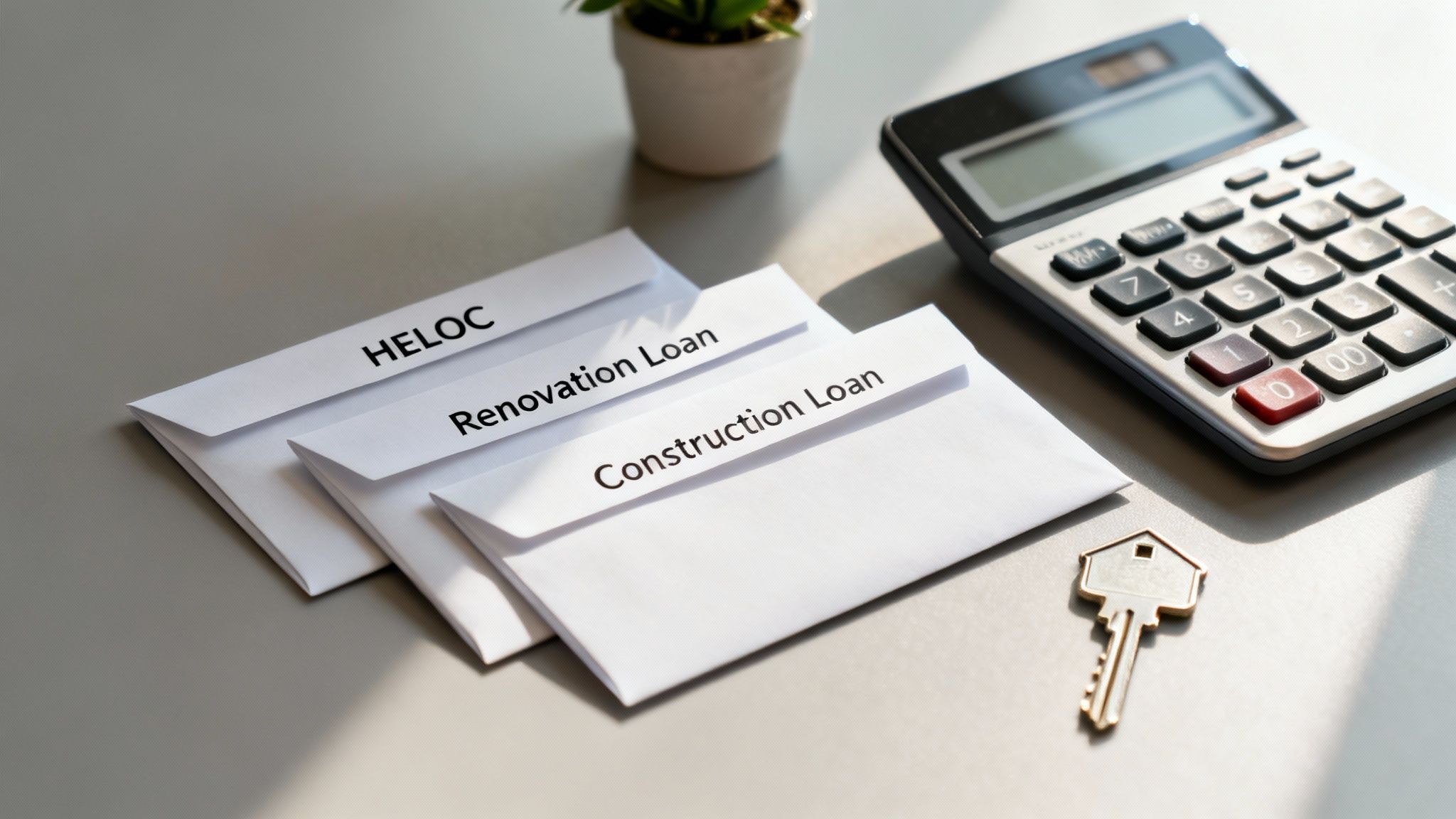
To fund your ADU, it's important to understand the various financing options available. Homeowners in Monterey, Santa Cruz, and Maricopa County are using more flexible financial tools. Let’s look at the most popular choices.
1. Home Equity Line of Credit (HELOC)
A HELOC is like a credit card that uses your home's equity. You get approved for a credit limit and can draw money as you need it during construction. You only pay interest on the money you use.
- Pros: This gives you great flexibility for paying contractors. Interest rates are often lower than personal loans.
- Cons: Most HELOCs have variable interest rates. This means your payment could go up over time.
2. Renovation or Construction Loans
These are special loans made for building projects. The loan amount is based on the future value of your property with the completed ADU. This often lets you borrow more than a standard home equity loan.
You can learn more by exploring our guide to home renovation loans.
- Pros: The loan is sized for your project's total cost. Money is released in stages as work is completed, which adds protection.
- Cons: The application process can be more complex. It requires detailed construction plans and a budget before approval.
Choosing the right financing is just as important as choosing the right builder. At Aldridge Construction, we help clients weigh these options. Our goal is to provide clarity so you can move forward with confidence.
Tapping into Grants and Local Programs
Besides traditional loans, there are often programs to encourage ADU construction, especially in California. These can give a big boost to your budget.
California ADU Grant Programs
The state of California sometimes offers grant programs. These can give homeowners thousands of dollars for pre-construction costs like design and permits. These programs change, so it's smart to check for current ones. Aldridge Construction stays on top of these and can help clients in Monterey, Santa Cruz, and San Benito counties find potential savings.
Local and Utility Rebates
Some cities or utility companies offer rebates for building energy-efficient homes. By using materials that meet California's Title 24 standards, you may qualify for programs that help lower your building costs.
Funding your ADU is about finding the right fit for your finances. A flexible HELOC, a construction loan, or a local grant can help you invest in your property wisely.
How to Save Money on Your ADU Build
Building an ADU is a big investment. But there are smart ways to manage your ADU budget without sacrificing quality. Getting the most value is about making good choices from the start.
The goal is to be strategic, not cheap. It means cutting costs in areas that won't hurt the long-term strength or appeal of your new space.
Start with Smart Design Choices
The choices you make in the design phase will have the biggest impact on your final cost. A simple, efficient layout is almost always cheaper to build than a complex one.
Think about these design strategies:
- Choose Pre-Approved Plans: Many cities, including some in Monterey and Santa Cruz counties, offer pre-approved ADU plans. Using one can speed up the permit process and save you thousands in design fees.
- Keep the Footprint Simple: A basic rectangle or square is the most cost-effective shape to build. Every complex angle adds labor and material costs.
- Design for Efficient Utility Hookups: Place your ADU’s kitchen and bathroom close together. This simple move shortens the plumbing and electrical lines, cutting down on material and labor costs.
Select Cost-Effective Yet Durable Materials
High-end finishes are nice, but you don't need to break the bank to create a beautiful space. The market has great alternatives that give a high-end look for less.
Here are a few examples of smart material swaps:
- Flooring: Instead of expensive hardwood, look at luxury vinyl tile (LVT). It’s durable, waterproof, and comes in many realistic wood and stone looks.
- Countertops: While granite is a classic choice, high-quality laminate or butcher block can provide a beautiful surface for less.
- Cabinetry: Choose ready-to-assemble (RTA) or stock cabinets. You can get a custom look with standard sizes and save a lot compared to fully custom cabinets.
The best way to save money is to prevent expensive mistakes. Miscalculations, permit delays, and rework can quickly increase your costs.
Partner with an Experienced Design-Build Firm
This may sound odd, but hiring the right professionals from day one is a great cost-saving move. An experienced design-build firm like Aldridge Construction manages your project under one roof. This saves you money and stress.
Our integrated approach helps keep costs down through:
- Value Engineering: We review the plans and suggest alternative materials or methods that deliver the same quality for less money.
- Accurate Budgeting: With deep experience in Monterey Bay and Maricopa County, we provide realistic estimates that prevent sticker shock.
- Efficient Project Management: Our process minimizes delays and ensures work is scheduled smoothly, avoiding costly downtime.
Partnering with a team that understands local costs is your best defense against budget overruns. Aldridge Construction’s expertise ensures your project is built efficiently and correctly.
Ready to Plan Your ADU? Here’s What to Do Next
You've done the research. You now know what goes into a realistic ADU budget. The next step is to apply that knowledge to your own property and vision.
It’s time to move from research to a real plan. For homeowners in Monterey, Santa Cruz, San Benito, and Maricopa counties, we invite you to take that step with a simple consultation. Our team is here to help you see what’s possible for your home.
Let's Build Your Plan Together
We’ll walk your property and talk through your goals. We'll answer your specific questions about local rules or potential costs. A great project starts with a great partner, so it's important to know how to find a good contractor who puts your interests first.
Let our local expertise be your guide. We can help you build a budget-friendly plan that works for your family or investment goals. Whether you’re dreaming of rental income or a home for family, Aldridge Construction is ready to help.
Reach out today to schedule your consultation.
FAQs About Your ADU Budget
How much should I set aside for a contingency fund?
We advise clients to plan for a contingency fund of 10% to 15% of the total construction cost. This is a safety net for unexpected issues, like finding rocky soil or making a last-minute design change. It keeps your project on track without adding financial stress.
Are prefab ADUs always cheaper than custom-built ones?
Not always. While a prefab ADU may seem cheaper at first, the final "all-in" cost is often similar to a custom build. This is because you still have to pay for all the site work. These costs include transporting the unit, hiring a crane, preparing the site, building a foundation, and connecting utilities. With a custom ADU from Aldridge Construction, you get a space that perfectly fits your property and vision.
Do I need to hire an architect and then a builder?
You don't have to hire them separately. A better way is to work with a design-build firm like Aldridge Construction. We handle everything under one roof. This integrated approach combines design, engineering, permits, and construction into one smooth process. It saves time and helps keep your project on budget.
How long does it take to get ADU permits?
Permit times vary by city or county. In general, plan on the process taking 3 to 6 months. During this time, the local building department reviews your plans to ensure they meet all safety codes. Our team's experience with planning departments in Monterey, Santa Cruz, and San Benito counties helps minimize delays.
Can an ADU really add that much value to my property?
Yes. An ADU is a powerful investment. It can generate rental income, provide a space for family, or add flexibility to your life. It almost always boosts your property's resale value. Some studies show a home with a permitted ADU can see a value increase of 25% to 35%. It's a smart, long-term investment.
Ready to turn your ADU vision into a realistic plan? The team at Aldridge Construction is here to help homeowners in Monterey Bay, Santa Cruz, San Benito, and Maricopa County. Contact us today for a no-pressure consultation.