
Starting a home improvement project in Salinas, CA is an exciting prospect. However, its success hinges on finding the right professional to turn your vision into reality. The best Salinas home improvement contractors, like the team at Aldridge Construction, are always fully licensed, insured, and deeply knowledgeable about local building codes. This isn't just a formality—it's what guarantees your project is completed safely and to the highest standard.
Navigating the Salinas Home Improvement Market

Before searching for a contractor, it’s helpful to understand the local landscape. Salinas and the broader Monterey County region have a bustling market for home renovations. Aldridge Construction sees this daily, with a unique mix of high property values, diverse architectural styles, and a constant demand for everything from modern kitchen updates to classic Spanish-style restorations.
This creates a competitive environment. This demand is driven by a housing market that consistently supports remodels and new construction, keeping local professionals busy. Homeowners can get a sense of the local business landscape by checking resources like the Better Business Bureau.
For homeowners, this means plenty of choices, but it also demands careful vetting. A successful project isn't just about finding someone with technical skills; it's about partnering with a firm that understands the specifics of building in this part of California.
Understanding Contractor Roles
To find the right professional, homeowners must first know who does what. Confusing these roles is a common pitfall that can lead to miscommunication and project delays.
- General Contractor (GC): A firm like Aldridge Construction acts as the project manager, overseeing the entire renovation from start to finish. The GC hires and schedules all specialists, manages the budget, pulls necessary permits, and serves as the homeowner's single point of contact.
- Subcontractors: These are the trade specialists a GC brings in for specific jobs. This includes licensed electricians, plumbers, painters, and drywall experts who work under the GC's direction.
For any significant remodel requiring more than one trade—such as a kitchen overhaul, a bathroom addition, or an ADU—hiring a general contractor is essential. They are the ones who orchestrate the complex scheduling to ensure everything flows logically and efficiently.
From Dream to Blueprint: Turning Your Vision into a Plan

Every great remodel starts long before the first hammer swings; it begins with a detailed plan. Before homeowners can get accurate bids from Salinas home improvement contractors, they must get their ideas out of their heads and onto paper. This is the single most important step to ensure everyone—from the homeowner to the project manager—is working toward the same goal.
It’s one thing to say "a new kitchen." It’s another to create a specific scope of work. Instead of "new countertops," the plan should specify "Calacatta Laza quartz countertops." Rather than "better windows," it should detail "energy-efficient Milgard Tuscany Series windows" that meet California's Title 24 energy standards.
Defining Your Project Scope
The best tool at this stage is a comprehensive project brief. This document should clearly outline both needs and wants. A great strategy is to list everything desired, then sort it into two columns: "must-haves" and "nice-to-haves."
This exercise is invaluable when budget conversations begin, providing a clear framework for making smart decisions. It’s also the best defense against "scope creep"—the slow, sneaky expansion of a project that can inflate budgets and extend timelines.
A detailed project brief should include:
- Floor Plans: A simple, hand-drawn sketch of the imagined layout can make goals crystal clear.
- Material & Finish Lists: A running list of specific products, from exact flooring and tile to specific faucet models and paint color codes.
- Inspiration Photos: A Pinterest board or digital folder with images that capture the desired style and feel.
Nailing Down a Realistic Budget
Once the scope is defined, a realistic budget can be assembled. A good rule of thumb is to allocate 80-85% of the total funds to known costs—the labor and materials detailed in the project brief.
The remaining 15-20% should be set aside as a contingency fund. This isn't extra money for add-ons; it’s a safety net for unknowns, like discovering outdated plumbing or structural issues hidden behind a wall. Proper financial planning is a cornerstone of success, as detailed in our guide to 9 essential home renovation tips.
Finding and Researching Reputable Salinas Home Improvement Contractors

With a project plan and budget locked in, it’s time to find the right partner. Building a solid shortlist of truly qualified Salinas home improvement contractors takes more than a quick search. The goal is to identify three to five professionals who are a great fit for the specific project.
The best place to start is with trusted referrals from friends, family, or neighbors who have had similar work done.
Building Your Initial List
Homeowners should tap into reliable channels where quality and reputation are paramount.
- Local Referrals: A firsthand, glowing review is the most dependable sign of a contractor's quality.
- The Better Business Bureau (BBB): The BBB provides ratings and accreditation that give a quick sense of a company's dedication to its clients.
- Local Trade Associations: Groups like the National Association of the Remodeling Industry (NARI) or local builders' associations are filled with vetted professionals.
When getting a referral, homeowners should ask key questions: How was their communication? Did they stick to the budget? Did they finish on time?
Evaluating Their Digital Footprint
Once a handful of names are collected, it's time for online research. A contractor's website is a window into their business and professionalism. A strong online presence should feature:
- A Detailed Portfolio: High-quality photos of finished work, especially projects in Monterey, Santa Cruz, or San Benito counties, show local expertise.
- Genuine Client Testimonials: Authentic, detailed reviews give a real sense of what it's like to work with the firm.
- Clear Service Descriptions: The website should make it obvious what they specialize in, whether it’s ADUs, kitchen remodels, or whole-home renovations.
This research helps trim the list to the most promising contenders. For a deeper dive into vetting, Aldridge Construction offers a resource on how to find a good contractor.
Conducting Interviews and Comparing Bids
After narrowing down the list of potential professionals, it's time to meet them. Choosing from the many Salinas home improvement contractors isn’t just about the lowest price; it's about finding a partner who can be trusted inside the home.
The interview stage is a chance to gauge expertise, communication style, and overall professionalism. Since a project can last for weeks or months, ensuring personalities and expectations align is critical for a smooth process.
Asking the Right Questions
A prepared homeowner gets better results. Walking into meetings with a solid list of questions is the best way to compare each candidate fairly.
Key areas to cover include:
- Experience with Similar Projects: Ask to see examples of similar projects completed in Monterey County or other service areas like Santa Cruz County.
- Communication and Updates: How will they keep you in the loop? Will you have a single point of contact? How often can you expect progress reports?
- Subcontractor Management: How do they vet and manage subcontractors? A great GC has a consistent team of trusted specialists.
- Project Timelines: Discuss their current workload and ask for a realistic start-to-finish timeline for your project.
For a comprehensive list, Aldridge Construction offers a complete guide on what to ask a general contractor before hiring them.
The image below gives a great overview of the typical project flow from a professional contractor.
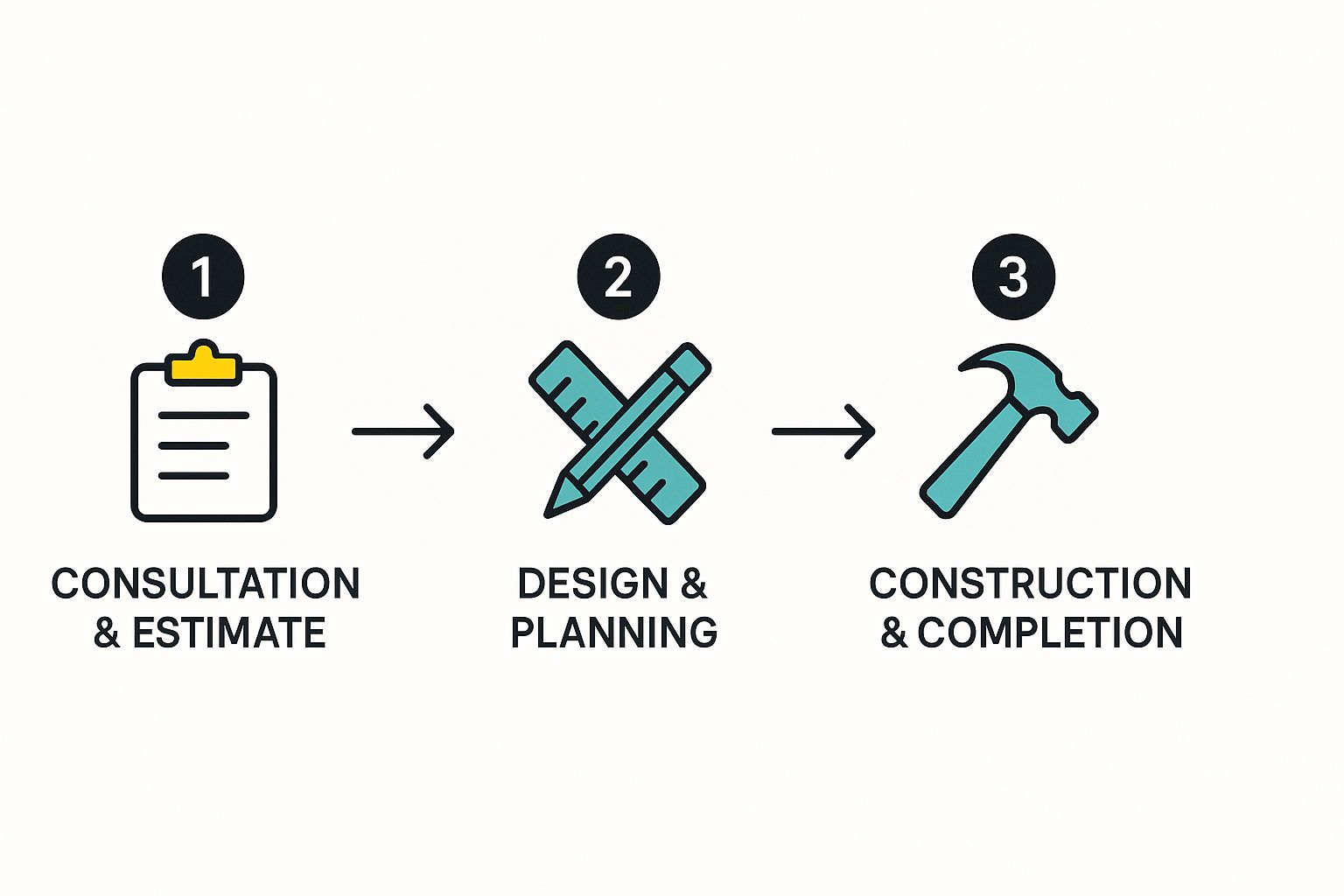
This structured approach is what homeowners should look for. It ensures everyone is on the same page at every stage of the project.
How to Analyze and Compare Bids
After interviews, written bids will arrive. Homeowners should look past the final number and scrutinize every detail. A vague, one-line quote is a massive red flag.
A professional, transparent bid—the kind a firm like Aldridge Construction provides—will be itemized, giving a clear breakdown of where the money is going. The cheapest bid is rarely the best value; a detailed bid demonstrates professionalism and is a strong indicator of quality.
A proper bid should clearly detail:
- Labor Costs: Estimated hours and rates for the construction team.
- Material Costs: A specific list of materials, including brands and quantities.
- Permit Fees: Costs tied to securing all necessary city or county permits.
- Contingency: A stated allowance for unexpected issues.
If one bid is dramatically lower, find out why. The final decision should be a balanced assessment of value, expertise, and trust—not just price.
Performing Your Final Due Diligence
With bids in hand, the next step is critical for protecting the investment. Performing final due diligence on the top contender is a non-negotiable final check before hiring any of the Salinas home improvement contractors considered.
This is where homeowners move past what the contractor said and start verifying it. It’s the last layer of security before signing a legally binding contract.
Verifying Licenses and Insurance
First, homeowners must confirm the contractor's license is active and in good standing. In California, this is easy to do.
- Check with the CSLB: The California Contractors State License Board (CSLB) has a free, public database to search a contractor's license status, complaint history, and workers' compensation information.
- Confirm Their Coverage: Ask for copies of their insurance certificates for both general liability and workers' compensation. Then, call the insurance provider to confirm the policies are active and sufficient.
A true professional will provide these documents without hesitation. Any pushback is a major red flag.
Talking to Past Clients
The final piece of the puzzle is talking to people who have already worked with the contractor. A portfolio shows the finished product, but a conversation with a past client tells the real story.
To get the most out of these calls, Aldridge Construction offers a comprehensive home remodel checklist to guide questions.
Key Questions for Contractor References:
- Was the project completed on time and on budget?
- How did the final cost compare to the initial bid?
- How was the communication throughout the project?
- Were you satisfied with the quality of the work and materials?
- Would you hire this contractor again without hesitation?
This level of detailed checking is essential. As of early 2024, the median household income in Salinas grew to $87,481, a 3.79% increase from the previous year, according to Data USA. This indicates that residents are increasingly investing in their properties, making thorough contractor vetting more important than ever. While Salinas contractor salary trends on ZipRecruiter show a wide range, your investment deserves the safest possible hands.
Understanding the Construction Contract
After the hard work of researching and vetting, the construction contract is the single most important document in the home improvement project. It’s a legally binding agreement that protects both the homeowner and the contractor. A professional Salinas home improvement contractor will always provide a detailed, transparent contract.
Key Components of a Strong Contract
Before signing, homeowners should review the contract with a fine-tooth comb. A well-crafted contract is a sign of professionalism and accountability.
Key elements must include:
- A Detailed Scope of Work: This should list every task, from demolition to final paint, with specifics like brand names for materials ("Pella windows" or "Dunn-Edwards paint").
- Total Cost and Payment Schedule: The contract must state a fixed price. The payment schedule should be tied to completing specific project milestones—like "framing complete"—not calendar dates.
- Project Timeline: This should include a firm start date and an estimated completion date.
- Change Order Process: A good contract defines a formal process for handling changes. A written "change order" detailing new work, cost, and schedule impact must be signed by both parties before that new work begins.
A vague contract leads to misunderstandings and surprise costs. For homeowners who want to learn more, Aldridge Construction has an in-depth guide on mastering construction contract negotiation.
Frequently Asked Questions (FAQs) About Hiring Salinas Home Improvement Contractors
Embarking on a home improvement project raises many questions. Here are straightforward answers to common queries from homeowners in Salinas and Monterey County.
1. How much should I pay for a down payment in California?
California law protects homeowners by limiting down payments. A contractor cannot legally ask for more than 10% of the total project cost or $1,000, whichever is less. A request for a larger down payment is a significant red flag.
2. What is a "change order" and why is it important?
A change order is a written amendment to the original contract that documents any changes to the project scope, cost, or timeline. It must be signed by both the homeowner and the contractor before any new work starts, preventing disputes and surprise costs.
3. Do I need a permit for my home remodel in Salinas?
Most likely, yes. The City of Salinas requires permits for most structural work, additions, and significant electrical or plumbing projects to ensure they meet safety codes. A professional general contractor like Aldridge Construction will manage the entire permitting process for you.
4. How long does a typical kitchen or bathroom remodel take?
Timelines vary based on scope, but a standard bathroom remodel can take 3-5 weeks, while a full kitchen remodel often takes 6-10 weeks. This includes planning, demolition, construction, and finishing. Your contractor should provide a detailed project schedule.
5. What makes Monterey County remodels unique?
Projects in our region often require an understanding of coastal climate considerations (like moisture and salt air), specific architectural styles (from Spanish Revival to Modern), and adherence to California's stringent building codes like Title 24 for energy efficiency. A local contractor’s experience is invaluable.
Ready to get clear, trustworthy answers for your home improvement project in Salinas, Monterey, or Santa Cruz County? The team at Aldridge Construction is here to help you navigate every step with confidence. Contact us today for a professional consultation.