
That musty smell in your basement or the white powder on the concrete is more than just a small problem. It’s a sign your home's foundation is letting in water.
To keep water out for good, the ultimate method to waterproof foundation walls effectively is a full exterior system. This isn't a quick paint job. It's a complete approach that involves digging, applying a seamless waterproof barrier, and installing a new drainage system. It's the only way to stop water before it touches your foundation.
Why Your Foundation Needs a Real Fix
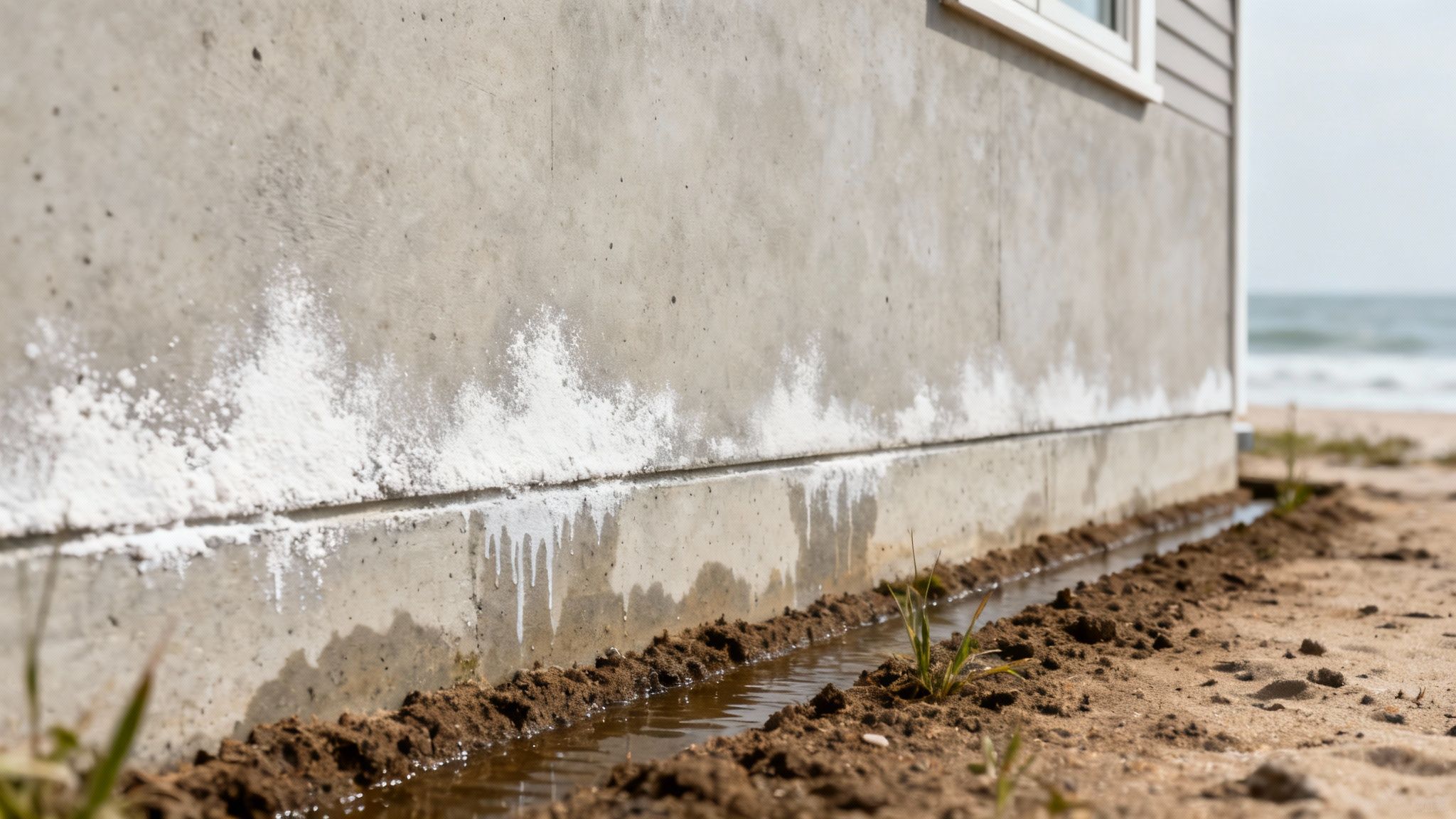
Many homeowners try to solve the problem by painting the inside walls with waterproof paint. This seems easy, but it’s just a temporary fix. It traps moisture inside the concrete, which can cause bigger problems later.
True, lasting waterproofing deals with the real source of the problem: the wet soil pressed against your home.
Here in coastal areas like Monterey and Santa Cruz Counties, the constant moisture from fog and rain puts a lot of pressure on foundation walls. This force is called hydrostatic pressure. It happens when wet soil pushes water through any tiny crack it can find in the concrete.
The Real Cost of Ignoring Water Leaks
Ignoring the first signs of water is a costly mistake. What starts as a small damp spot can turn into serious damage that affects more than just your basement.
Here are the key risks you face if you don't fix foundation moisture:
- Structural Damage: Water weakens concrete and rusts the steel rebar inside your foundation. Over time, this can harm the entire structure of your home.
- Health Problems: Dampness is a perfect home for mold and mildew. These can trigger allergies, asthma, and other serious breathing issues for your family.
- Lower Property Value: Water problems are a huge red flag for home buyers and can lower your home’s value. No one wants to buy a house with a leaky basement.
If you see any of these issues, it's time to take action. Below is a quick guide to help you understand what you're seeing and what it means for your foundation.
Key Signs of Foundation Water Problems
| Symptom | What It Looks Like | What It Means |
|---|---|---|
| Efflorescence | A chalky, white powder on concrete or masonry walls. | Water has come through the concrete and dried, leaving salt behind. It's a clear sign of moisture. |
| Musty Odors | A constant damp, earthy smell, especially in the basement. | This is the classic smell of mold and mildew, which love damp, dark places. |
| Peeling Paint | Paint blistering off interior basement walls or bubbling wallpaper. | Moisture is being pushed through the foundation from the outside, getting trapped behind paint or paper. |
| Wall & Floor Cracks | Cracks on foundation walls or the basement floor. | Can be caused by water pressure pushing against the foundation, or soil settling from being too wet. |
| Water Stains | Dark, discolored patches on foundation walls or floors. | These are the tracks showing where water has entered or is currently leaking in. |
Seeing these signs means your foundation needs help. The goal of good waterproofing is to stop these problems before they start. This avoids the need for other fixes like basement dehumidification. Protecting your foundation now is one of the smartest investments you can make.
A Growing Need for Professional Solutions
More people are seeking real, reliable waterproofing. The market for basement waterproof coatings is valued at around $5 billion in 2025 and is expected to grow. [Verified Market Reports, 2024]
This growth is driven by more extreme weather, which raises groundwater levels and flood risks. You can learn more about these market trends in this detailed industry report.
At Aldridge Construction, we’ve seen homes in Monterey County where small cracks, ignored for years, led to tens of thousands of dollars in repairs. A proactive exterior waterproofing system would have prevented all of it for much less money.
Interior vs. Exterior Waterproofing: What's the Difference?
When homeowners find a damp basement, they have a choice: fix it from the inside or the outside? Understanding the difference is the first step to a real solution.
Interior waterproofing, like special paints or drains, is really just water management. It deals with moisture after it has already seeped through your foundation. These are quick fixes that don't stop the water at its source.
Exterior waterproofing is a proactive defense. This method creates a sealed barrier on the outside of your foundation. It stops water before it gets a chance to get into the concrete. This is the only way to truly waterproof foundation walls because it solves the root problem.
When Interior Fixes Aren't Enough
For homes in coastal areas like Monterey County, interior solutions often fail against the constant moisture. We worked on a home in Carmel where the owner had tried every interior sealant and paint available. The musty smell always came back with the rain.
The real issue was the damp coastal climate keeping the soil wet. The only permanent fix was to waterproof the foundation from the outside.
An interior French drain might get rid of some water, but it still lets your foundation get wet. This constant moisture slowly breaks down the concrete and can lead to bigger structural problems.
Why Exterior Waterproofing Is the Best Method
True, professional waterproofing means digging around your foundation to apply a seamless membrane to the exterior walls. This creates a shield that blocks water from ever touching your foundation.
- It Stops Water at the Source: By keeping water out from the start, it keeps your foundation walls dry.
- It Relieves Water Pressure: With a proper exterior drain, it gives soil water a place to go, relieving the pressure against your home.
- It’s a Permanent Solution: Unlike interior coatings that peel or fail, a professionally installed exterior membrane is made to last for decades.
The global market for foundation waterproofing membranes was valued at $2.1 billion in 2022 and is projected to grow quickly. [Verified Market Reports] This shows a big shift toward these stronger, proactive solutions. You can discover more insights about these market trends. For homeowners in California and Arizona, this path protects your property’s value for the long haul.
How Professionals Waterproof from the Outside
Professional waterproofing is a big job. It’s more than just putting sealant on a wall. It’s a full defense system designed to stop water for good. Here at Aldridge Construction, this is how we make sure homes in Monterey and Maricopa counties stay dry.
It all starts with digging. We carefully dig around your home to get access to the foundation walls. This step must be done carefully to avoid damage. For tight spots, we sometimes use special difficult access excavation solutions. Once the walls are exposed, the real work begins.
Preparing the Foundation Surface
You can’t put a new barrier on a dirty wall. First, we deep clean the foundation with a pressure washer. This removes all dirt, clay, and old sealant. This step is key so the new membrane can create a strong bond.
Next, our crew inspects every inch of the foundation. We look for cracks, holes, or weak spots. We repair every flaw with high-strength epoxy or hydraulic cement. This creates a smooth, solid surface ready for the main barrier.
Applying the Waterproofing Layers
With a clean and solid foundation, we apply the main waterproof barrier. At Aldridge Construction, we use a liquid-applied, polymer-modified asphalt membrane. We spray this on as a thick liquid. It dries into a seamless, rubber-like shield around the foundation.
Unlike sheets that have seams (which can leak), this liquid method creates one continuous barrier. Its flexibility is its best feature. The membrane can stretch and move as the foundation settles, which prevents it from cracking.
Expert Insight: A good waterproofing system not only stops water but also manages it. A barrier alone isn't enough. You must give the water a place to go. That's why a drainage system is so important.
Installing a Strong Drainage System
After the membrane is dry, we install a dimple drainage board over it. This is a tough plastic sheet with raised bumps. These create an air gap between the waterproofed wall and the soil. That gap lets any groundwater flow down to the drain without putting pressure on your wall.
Finally, we install a new French drain system at the base of the foundation. We lay a perforated pipe in a bed of clean gravel. The pipe collects water and carries it safely away from your house. This entire process requires a lot of experience, which is why knowing how to find a good contractor is so important.
Materials a Pro Contractor Trusts
Not all waterproofing materials are the same. Using the right products is just as important as how they are installed. A contractor's reputation depends on choosing materials that last. This is why we avoid brittle, cement-based coatings that often crack.
Instead, we use high-performance, flexible materials designed for local climates. Whether it's the damp soils of coastal Monterey County or the clay in Maricopa County, flexibility is key.
Liquid-Applied Membranes: The Best Choice
For the main barrier, our top choice is a liquid-applied, polymer-modified asphalt membrane. It’s sprayed on, creating a seamless, rubber-like shield that bonds directly to the foundation.
This method gives us great adhesion and amazing flexibility. As the ground shifts over time, this membrane stretches with it. That prevents cracks and keeps the barrier working for decades.
The Importance of a Dimple Drainage Board
After the membrane is applied, the next key part is a high-quality dimple drainage board. This tough plastic sheet creates an air gap between your foundation and the soil. This gap is important for two reasons:
- It protects the membrane: The board acts as a shield, stopping rocks from poking holes in the waterproofing layer.
- It channels water away: It creates a path for groundwater to flow down to the French drain, relieving pressure on your walls.
This combination of a flexible membrane and a strong drainage board is the core of a lasting waterproofing system. The global market for these membranes is expected to grow to over $4 billion by 2032. [Fortune Business Insights, 2023] This shows the industry is moving toward these professional-grade solutions. You can learn more about these market trends and their impact on construction.
A simple fabric filter might stop some dirt, but it can clog and does nothing to relieve water pressure. A dimple board is an engineered solution that actively manages water, which is why it's a key part of our process.
Waterproofing Material Comparison
This table breaks down the pros and cons for the materials we trust.
| Material Type | Best For | Pros | Cons |
|---|---|---|---|
| Polymer-Modified Asphalt | Most home foundations, seamless needs, areas with soil movement. | Very flexible, seamless, great adhesion, self-healing for small punctures. | Needs professional spray tools, requires protection during backfill. |
| Sheet Membranes (Peel-and-Stick) | Smooth, even concrete walls where seams can be managed well. | Consistent thickness, good puncture resistance. | Seams are a weak point, can be hard to apply around corners. |
| Bentonite Clay Panels | Commercial projects, areas with constant water, vertical walls. | Self-healing, works well under high water pressure, long-lasting. | Must stay wet to work, can be heavy and hard to install. |
| Crystalline Admixtures | New concrete pours, fixing small cracks from the inside. | Becomes part of the concrete, permanent, can seal future tiny cracks. | Not as good for big cracks or joint movement, not a full exterior barrier. |
Each of these has its use, but for most homes, a liquid-applied membrane and a drainage board offer the best long-term protection.
Choosing the right materials also means being green. For homeowners interested in sustainable options, you can explore some of our preferred green construction materials that work well without harming the environment.
Long-Term Strategies to Protect Your Investment
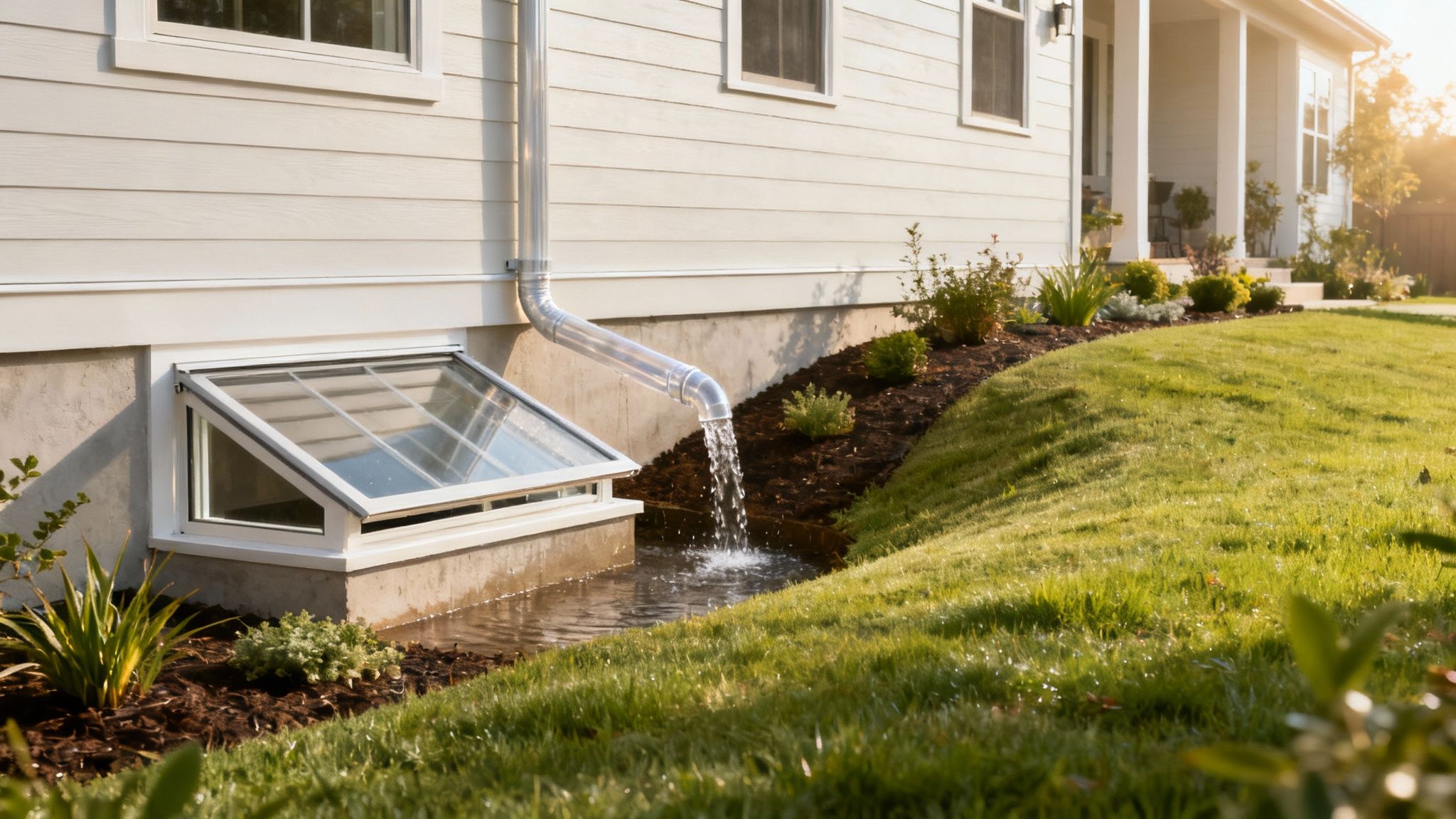
Getting a professional exterior waterproofing system is a huge step for your home. But the job isn’t done after the dirt is put back. To protect that investment, you need a simple maintenance plan. These tips will keep your foundation safe and dry for years.
Your first job is to manage the water around your home. Think of your yard as the first line of defense. Proper grading—making sure the ground slopes away from your house—is a simple but powerful way to send rainwater away from your foundation.
Manage Water at the Surface
Even the best waterproofing system can get overwhelmed if too much water is dumped next to your foundation. This is where your roof's drainage system is so important. Keeping gutters and downspouts clear of leaves and debris is a must, especially before the rainy seasons in San Benito County.
When a gutter clogs, water will spill over the edge. This soaks the soil right next to your foundation. To make your system work well, make sure your downspout extensions carry water at least five to ten feet away from your home.
Homeowners often overlook these simple things, but they are a key part of making your waterproofing investment last. A little upkeep now can save you thousands of dollars in repairs later.
Smart Landscaping and Regular Checks
Your landscaping choices can affect your foundation. Trees add beauty, but their roots can cause damage. Avoid planting trees with aggressive roots, like willows or silver maples, too close to the house. Their roots will search for moisture and can damage your waterproof membrane or drain pipes.
Finally, a few quick seasonal checks can make a big difference. Get in the habit of doing a quick walk-around.
- Inspect Window Wells: Make sure they’re clear of leaves. Covers should be secure to keep rain out.
- Check for Soil Settlement: Look for low spots near your foundation where water might pool. Fill them with soil to keep the ground sloping away.
- Monitor After Storms: After a heavy rain, take a quick walk. See where the water is flowing and if any areas need fixing.
These simple steps are very effective. They protect your waterproofing system and boost your home's value. Thinking about the long game and understanding your home renovation return on investment shows the true value of this proactive maintenance.
Protect Your Home for Good
A complete exterior system, built with top materials by experts, is the only way to get lasting results. You can clear your own gutters, but full-scale foundation work is not a weekend DIY project.
This is a job for pros who know the soil and climate in Monterey, Santa Cruz, and Maricopa counties. A quick fix almost always turns into a bigger, more expensive problem later. You need a team you can trust to do it right the first time.
Don't risk your biggest investment. A professionally installed waterproofing system is a permanent solution that secures your home's safety and value.
Before you hire a contractor, be prepared. Knowing the right questions to ask general contractors helps you partner with an expert who will deliver the quality your home deserves.
If you’re ready to end your water problems for good, schedule a consultation with our team at Aldridge Construction. We’re here to design a durable waterproofing solution that’s made to last.
Frequently Asked Questions About Foundation Waterproofing
Here are some common questions we get from homeowners in Monterey and Maricopa counties.
1. How long does professional exterior waterproofing last?
When done the right way with high-quality materials, an exterior system is a permanent solution. A liquid-applied membrane and a solid drainage system are designed to last for decades. This is not a temporary fix like interior paint that might peel in a few years. It's a system built to protect your home for the life of the structure.
2. Can't I just waterproof my foundation from the inside?
Interior "waterproofing" is really more like water management. It only deals with moisture after it has already pushed through your foundation walls. While it might offer some temporary relief, it doesn't solve the root cause of water pressure. Worse, it can trap moisture inside the concrete, leading to more damage.
3. What is the average cost to waterproof a foundation?
The cost can vary a lot. It depends on the size of your home, how deep we need to dig, and how easy it is to access the site. While it is a significant investment, it is much less than the cost of major structural repairs from long-term water damage. The only way to know for sure is to get a detailed quote for your home.
4. How do I know if a foundation crack is a serious problem?
Not all cracks are a major issue. Tiny, vertical hairline cracks are often a normal part of concrete curing. The cracks to worry about are horizontal cracks, any cracks wider than 1/8 of an inch, or cracks that are actively leaking water. These are signs of serious water pressure, and you should have a professional look at them right away. Be aware that major structural work can require building permits, so it’s good to understand the local construction permit requirements.
5. Does waterproofing increase my home's value?
Yes, absolutely. A professionally waterproofed basement is a huge asset when you sell your home. It removes a major worry for buyers, proves the home is structurally sound, and makes the lower level more usable. Data shows that moisture control and foundation projects provide a good return on investment.
Ready to protect your foundation with a solution that lasts? The team at Aldridge Construction has the expertise to secure your home against water damage for good.