
It's the question every homeowner asks before a renovation: “Will this actually finish on time and on budget?” The fear of a project dragging on for months and costing more than expected is real. Homeowner survey data shows that 78% of projects go over budget and 46% face significant delays.
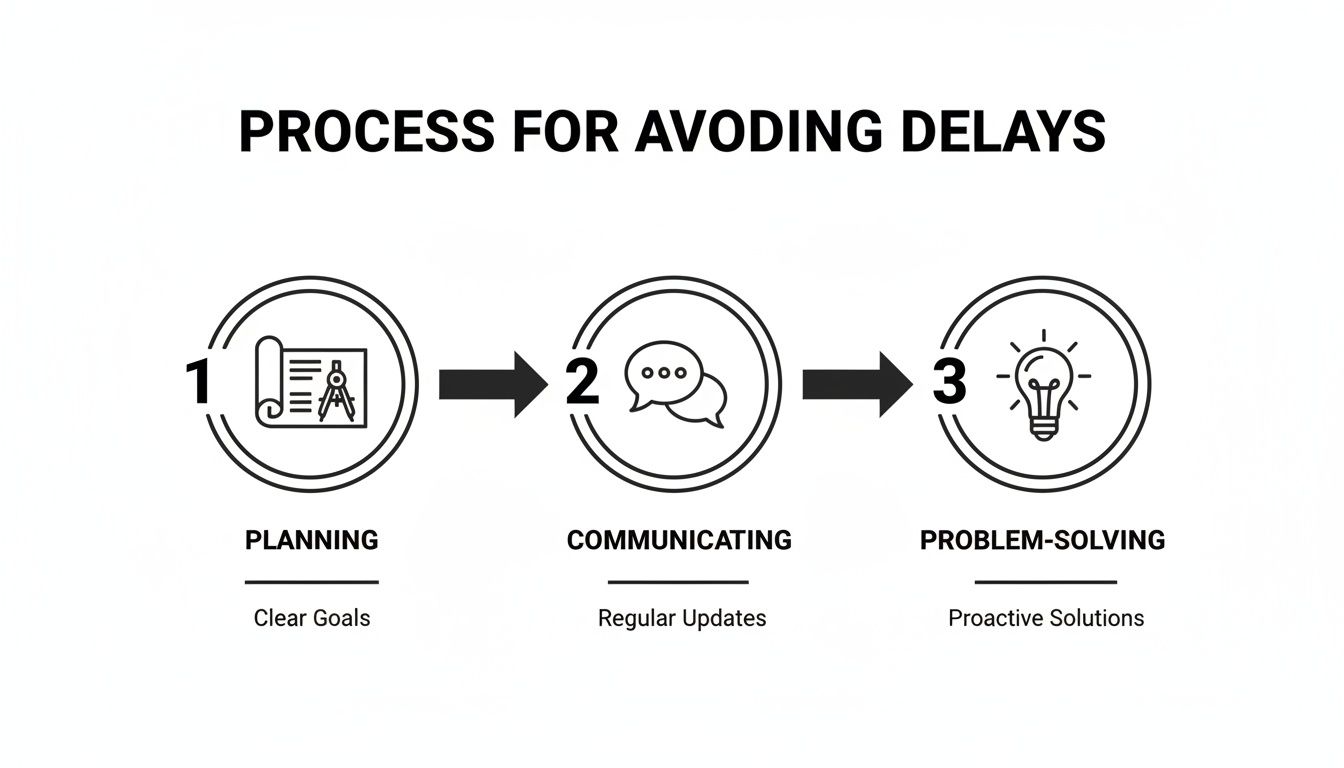
But these problems are not just bad luck. They are often a sign of a weak process. A trustworthy contractor knows how trustworthy contractors avoid the usual delays by replacing hope with a system built on clear planning, open communication, and smart problem-solving. Clients are no longer comparing contractors on price alone; they are comparing who gives them the most confidence.
Why Construction Delays Happen
Most renovation delays come from a few common problems. If a contractor doesn't address these issues in the planning phase, the project is already behind schedule.
Common issues include:
- Vague Plans: An estimate without clear details is a major red flag. If it doesn't list what is and isn't included, arguments over materials and surprise costs can stop all work.
- Poor Communication: Feeling left in the dark is stressful. When there are no regular updates, small questions can turn into big problems and slow down decisions.
- Permitting Hurdles: Getting permits in Santa Cruz, Monterey, or San Benito counties takes local experience. An inexperienced contractor often underestimates the time needed for approvals, creating a delay before work even begins. You can learn more about local permit requirements in our guide: https://aldridgeconstruction.biz/construction-permit-requirements/
A good contractor handles these issues from the start. A clear process turns these common headaches into non-issues.
The Proactive Solution to Common Delays
A trustworthy contractor doesn't just react to problems; they have a system to prevent them. This table shows the difference.
| Common Cause of Delay | The Proactive Solution |
|---|---|
| Material & Fixture Delays: Waiting for backordered tile or windows to arrive stops all progress. | Early Procurement: Ordering all long-lead-time items before demolition begins. The materials are secured and waiting on-site. |
| "Surprise" Change Orders: The scope wasn't clear, leading to expensive, time-consuming changes mid-project. | Detailed Scope of Work: A line-by-line document outlining every material, finish, and labor task, signed off by both parties. |
| Permit Approval Gridlock: Underestimating the time and complexity of securing local permits. | Local Permit Expertise: A contractor who knows the specific processes and people at the local building department to navigate it efficiently. |
| Subcontractor No-Shows: The plumber or electrician doesn't show up on their scheduled day, creating a domino effect of delays. | Integrated Scheduling: Using a master schedule shared with all trades. Everyone knows when they are needed weeks in advance. |
| Lack of Homeowner Decisions: The project stalls because the contractor is waiting for the client to pick a paint color or faucet. | Selection Deadlines: A clear schedule provided to the homeowner with dates for when key decisions must be made to keep the project moving. |
This highlights a key truth: great contractors build a system to prevent problems. It’s not magic; it’s just good business. At Aldridge Construction, our approach is designed to turn homeowner anxiety into confidence from day one.
Winning the Project with Meticulous Planning
A successful renovation is built on a solid foundation of planning. This pre-construction phase is where a trustworthy contractor's value truly shines. It’s how pros avoid delays—by winning the project before it even starts.
The cornerstone of this process is a detailed Scope of Work (SOW). A professional SOW leaves no room for guesswork. It lists everything from the brand of drywall primer to the specific model of faucet.
Defining a Clear Path Forward
With a detailed scope, the next step is to map out the entire project with clear milestones. A professional timeline isn't just a start and end date; it’s a roadmap for each phase of construction.
Key milestones typically include:
- Demo and Site Prep: Safely clearing the space for new construction.
- Rough-Ins: Installing new plumbing, electrical wiring, and HVAC inside the walls.
- Inspections: Passing required city or county inspections.
- Finishes: The phase where drywall, paint, flooring, and cabinets bring your vision to life.
- Punch List: A final walkthrough to identify and correct any minor issues.
This milestone-based schedule helps you understand what happens at each phase. A contractor should walk you through what’s included—and what’s not—in your initial estimate.
This detailed planning is especially important in Monterey, Santa Cruz, and San Benito Counties. A local contractor knows to build the schedule to account for regional factors, like potential weather delays or specific permit office lead times.
Accounting for Real-World Timelines
For example, a detailed plan for an ADU project in Monterey County anticipates the required Title 24 compliance checks. It also factors in the 6-8 week lead time for specialized, energy-efficient Milgard windows.
By ordering materials in advance and scheduling inspections proactively, the project flows smoothly. To see how these steps come together, you can find a guide in our home remodel checklist.
Managing Materials and Subcontractors Like a Pro
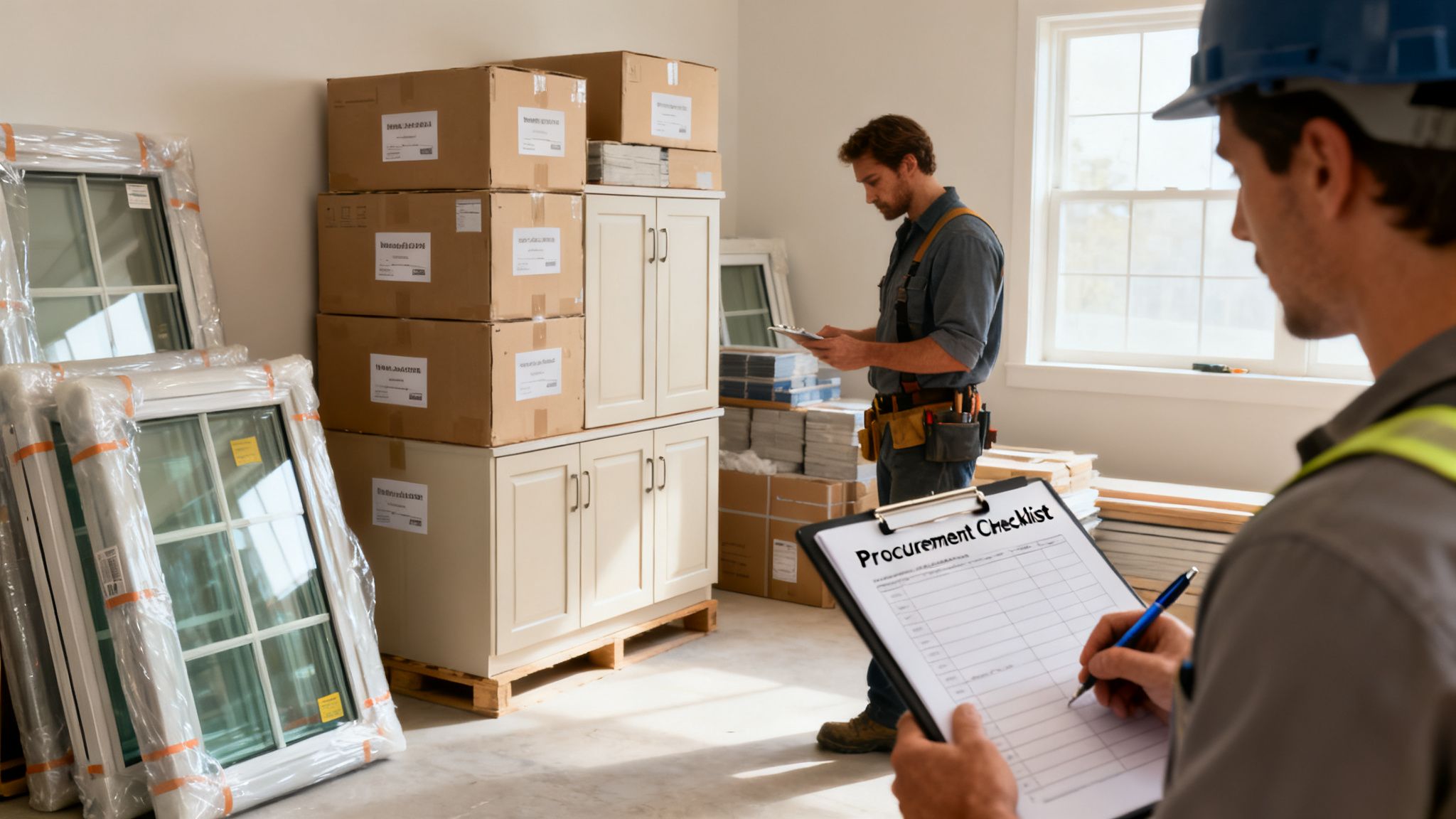
A project can still stop for two big reasons: a critical material doesn't show up, or a key subcontractor is a no-show. This is where mastering the complex dance of procurement and trade management comes in.
This skill truly separates seasoned pros from everyone else. The strategy starts with ordering items with long lead times—like custom kitchen cabinetry or specialty windows—months before they're needed.
The Power of a Vetted Network
A top contractor doesn’t just find the cheapest electrician at the last minute. They rely on a core group of vetted, trusted professionals they have built relationships with.
This network acts like an insurance policy against delays. These partners know the contractor’s standards for quality. They show up on time and are integrated into the project schedule, creating a seamless workflow.
At Aldridge Construction, our long-standing relationships with Central Coast suppliers and trades are key to our process. We know who to call in Monterey for custom millwork and which plumber in Santa Cruz is the most reliable.
This is how we ensure the right people and materials—like energy-efficient Milgard windows or durable Quartz countertops—are on-site exactly when needed. The importance of having such standards in place is detailed in our construction quality control checklist.
Keeping You in the Loop with Transparent Communication
Silence from your contractor is a giant red flag. A trustworthy builder knows that clear, consistent communication is the lifeline of a project. It is the best tool for preventing misunderstandings that lead to delays.
You should expect a clear communication plan from the start. This isn't just about someone answering your calls; it's a structured process. For example, we establish weekly progress updates so you always know what was completed, what’s happening now, and what’s next.

Clarifying the Change Order Process
Changes to the original plan are a common point of friction. A professional contractor manages this with a formal Change Order process. This simple step is a key part of how trustworthy contractors avoid the usual delays.
A Change Order is a professional document that clearly outlines:
- The specific change requested (e.g., upgrading to quartz countertops).
- The exact cost of the change, including materials and labor.
- The impact on the project schedule, detailing any extra days needed.
No new work begins until you have reviewed and signed off on the Change Order. This protects both you and the contractor by making every decision clear and documented. You can learn more in our guide on construction contract negotiation.
How Smart Contractors Plan for the Unexpected
Even the best plans can run into surprises. A contractor’s experience really shows its value when the unexpected happens. Seasoned pros actively plan for bumps in the road.
This forward-thinking is a huge part of how trustworthy contractors avoid major delays. They build buffers into the schedule and budget from the start. This is about honest risk management that protects your project.
Building in a Time Buffer
An experienced contractor on the Central Coast knows a project timeline needs breathing room. A schedule that’s too tight will break at the first sign of a problem.
Smart contractors build in "buffer days" to handle common issues like:
- Weather Delays: A winter storm in Santa Cruz County can shut down exterior work for days.
- Inspection Backlogs: The local building department can get busy, causing a day or two of waiting.
- Subcontractor Shuffles: Even a reliable plumber can have an emergency.
This foresight prevents a small delay from turning into a week-long problem. For a closer look at how planning impacts projects, check out our guide to bathroom renovations.
Planning for Financial Contingencies
A financial buffer is just as important. Surprises are common during demolition, especially in older homes. It’s impossible to see what’s behind a wall until you open it up.
We often find issues like hidden dry rot or old wiring. A professional contractor addresses this by including a contingency fund in the budget, usually 5-10% of the project cost.
This money is only used if a real, unforeseen issue comes up. Its use is always discussed with you and approved first. This way, a small problem gets handled without derailing your project.
FAQs: Understanding and Avoiding Construction Delays
Here are answers to common questions homeowners in Santa Cruz, Monterey, and San Benito counties have about project timelines.
1. What's a "normal" amount of delay for a home remodel?
A few days for weather or a surprise inspection issue can be normal. However, a well-managed project should stay within 5-10% of its original timeline. Anything more suggests a problem with planning or communication.
2. What's the biggest reason projects go over budget?
"Scope creep" is the number one cause. This happens when changes are made mid-project without a formal process. A trustworthy contractor prevents this with a detailed initial plan and a strict change order system that you approve before any work is done.
3. How can I tell if a contractor's timeline is realistic?
Ask for a detailed, milestone-based schedule, not just a start and end date. It should show distinct phases like demo, rough-ins, inspections, and finishes. A timeline that seems too good to be true probably is.
4. Is the lowest bid always a bad sign?
Not always, but it requires extra care. A very low bid might mean the contractor missed something, used cheaper materials like vinyl instead of hardwood, or didn't budget for proper permits and insurance. A good quote is transparent and itemized.
5. What should I do if my project is already delayed?
Review your contract and the agreed-upon schedule. Then, schedule a meeting with your contractor to discuss the reasons for the delay. The goal is to create a written action plan with a new, firm completion date.
For a more complete checklist, feel free to dive into our guide on questions to ask general contractors.
Want help creating a transparent process that earns homeowner trust in Santa Cruz, Monterey, or San Benito County? Reach out to Aldridge Construction—we’re happy to share what works. Learn more at https://aldridgeconstruction.biz.